Even urbanites often maintain a country retreat where at least an orchard is maintained for their own use. This type of garden is more low-maintenance in a structural sense.
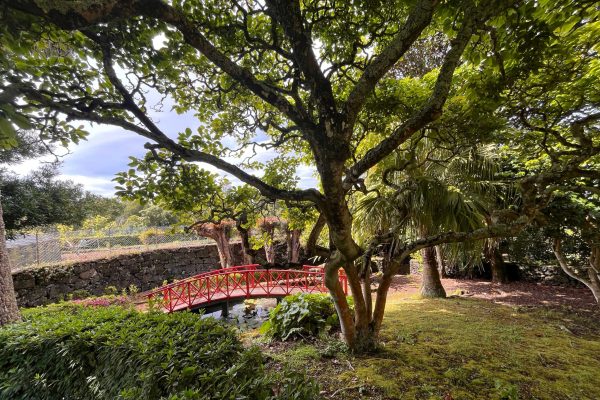
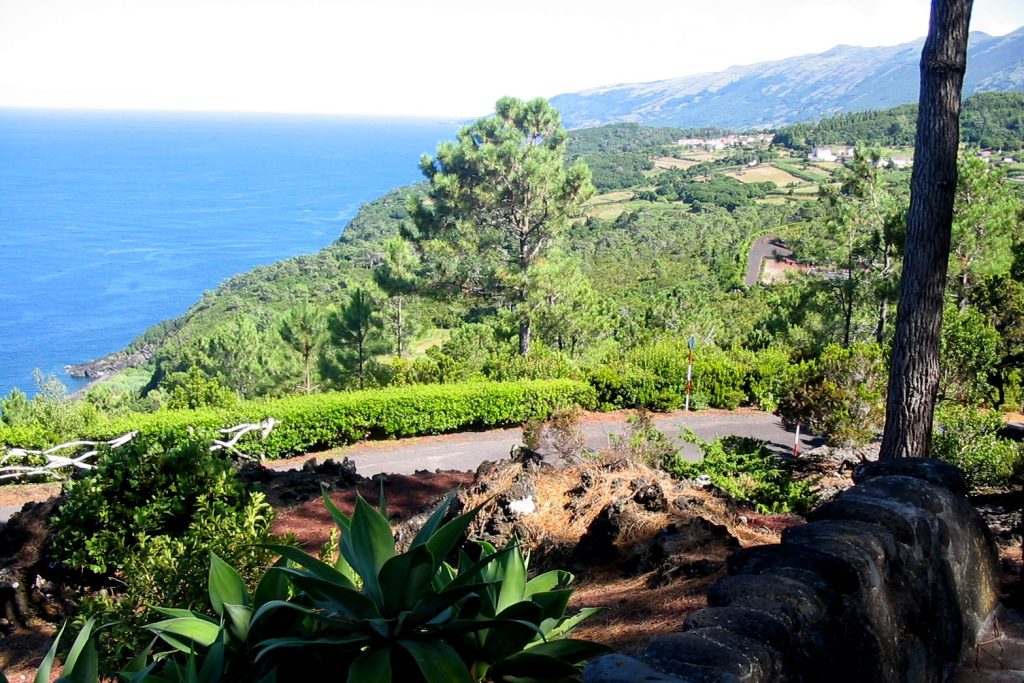
“The islands have a microclimate here and there where trees from both the northern hemisphere and the southern hemisphere can grow. “
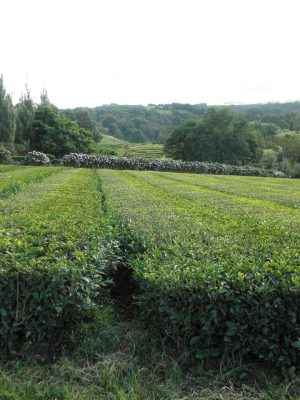
Slightly away from the often deeply rooted desire of locals for self-reliance, the edible forest type of garden is somewhat broader in its set up . Where useful trees are combined with perennial and/or perennial edible and other useful plants planted as a self-regulating whole that closely resembles perma- and polyculture principles, with tall(er) trees, small (fruit) trees, shrub crops, herb layer, root crops, creeping plants and a vertical layer of edible climbers.
If you are really talking about a garden according to permaculture principles, then a wetland area and mycelia, or fungal layer, are added. That important base layer forms relationships with the roots of plants and trees. They protect plants from disease, and transport nutrients through the soil and to the roots.
The great advantage of an edible forest garden is that, like a farm garden, multiple ecological niches are filled. As a result, the sun and soil are used optimally by the different layers of useful plants and weeds are a much smaller problem, because everything grows lushly on the Azores, and that fact does not discriminate between what is and is not a desirable crop.
By growing several layers of food underneath each other as in this system, the yield still becomes interesting. Finally, with an edible forest garden, you have less maintenance each time in the long run, because it is an ecosystem in itself that is largely self-balancing, just like natural climax ecosystems.
The islands have a microclimate here and there where trees from both the northern hemisphere and the southern hemisphere can grow. The orchard often includes Mediterranean fruits such as citrus, but also, for example, mulberry, sweet chestnut, plums, cherries, figs, passion fruit, guava, cherimoya, avocado, papaya and mini bananas.
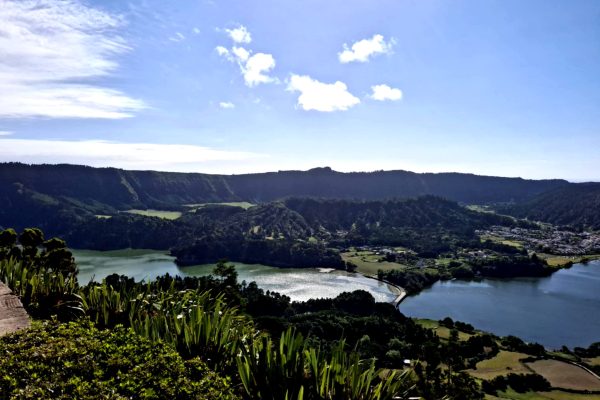
In nature, most biodiversity occurs on banks and forest edges. You don’t need a whole forest for a forest edge. Such a forest edge can also be imitated to keep the garden airy at the same time. This has advantages. The principle is to leave the soil alone. Digging accelerates soil acidification by leaching minerals. By not digging, soil life can develop optimally.